First Unitarian Universalist Society of Burlington
November 23, 2025
Reverend Karen G. Johnston
Wicked Ways, Preface
Perhaps we have Bruce Kraut to thank for this morning’s topic: the nature of evil.
Mr. Kraut was my 5th grade teacher. He kept a record player in the classroom. Every Friday morning, we sang along to “The Impossible Dream” from the musical, Don Quixote.
To dream the impossible dream To fight the unbeatable foe
Thus, here I am, this morning. Using a different musical to help us enter into this complex, seemingly impossible, territory.
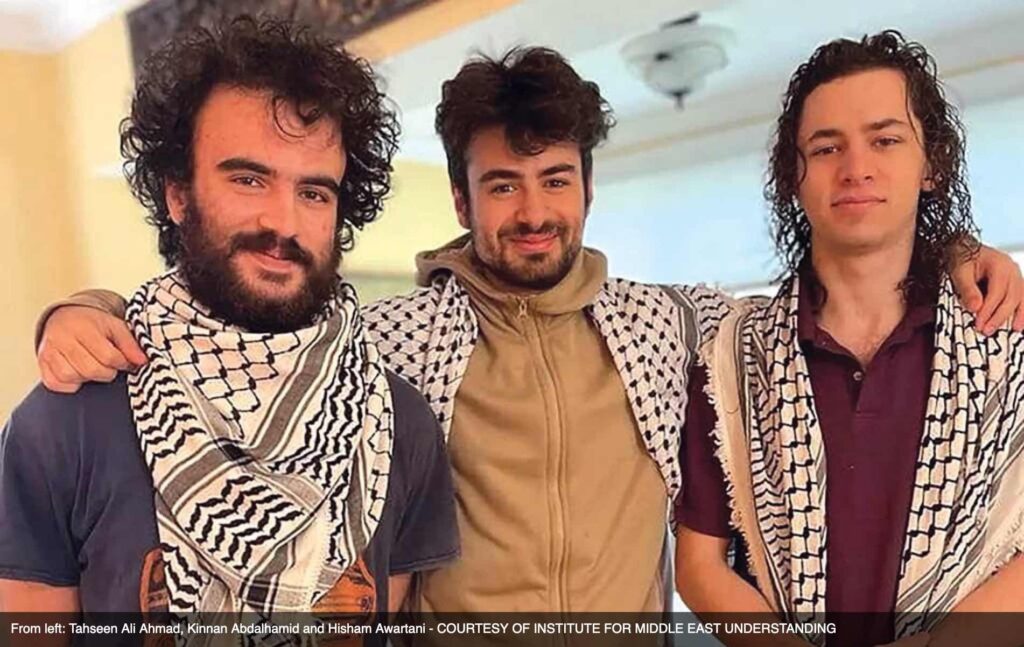
Actually, the seed for this sermon was planted two years ago, minus one week. It was planted when Hisham Awartani, Kinnan Abdalhamid and Tahseen Ali Ahmed – three Palestinian students – were shot here in Burlington. Shot here, on the weekend of Thanksgiving. Shot here, by someone known to this congregation. Shot here, by someone who had identified as a Unitarian Universalist for over a decade.
That act of violence lives with those three young men, and with their families. And it lives with me still – and likely with you, too – as members of this community.
Are people evil? Or is it only actions that are evil?
Is good the opposite of evil?
Is it possible to vanquish evil? Or is it an essential aspect of the nature of reality?
How do our Unitarian Universalist Values and Principles help us to move beyond personal reactions into an ethical collective response?
I am asking these questions for us, but I am also asking for myself. Because nearly every day, after reading about yet another horrific thing perpetrated by our current government, I find myself cursing and calling it evil.
I’m not much bothered that I am labeling individual ACTIONS or systems of harm as evil. That makes sense to me. It’s when I find myself calling INDIVIDUALS evil, I wonder how my religious value of equity, the one that affirms that every person as inherently worthy, fits.
And so here we are, exploring a problem that may or may not be impossible, but over the course of human existence, certainly has not yet been solved.
As we spend this morning together, let us commit to refuse to lease our imaginations to that racist trope of evil as dark and good as light. Whether white supremacy culture birthed that metaphor, or fed on it and thus became strengthened, it doesn’t much matter. We’ll give it a wide berth.
Part I
Here is the second of three parts of the sermon. First, a timeline.
In 1990 there was the L. Frank Baum novel, The Wonderful Wizard of Oz.
In 1939, the film adaptation, with those ruby red slippers and Judy Garland as Dorothy.
The 1970s brought us The Whiz, the story reimagined through an African American lens.
In 1995, Gregory Maguire published the novel Wicked: The Life and Times of the Wicked Witch of the West. Think of it as a prequel – the story before Dorothy’s house in Kansas is taken up by a tornado and falls in Munchkin Land, on the Wicked Witch of the EAST, killing her.
In 2003, inspired by that novel, a musical arrived on Broadway and is still playing there, over two decades later.
Most recently, with Part I a year ago, and Part II, this week, there is Wicked the Movie (based more on the musical and less on the novel).
Now, in the story from that 1939 film, the two witches, east and west, are plainly the villains. We know little else about them, not even their names. The Wizard, while deceptive, is bumbling and ultimately endearing.
The narrative in Wicked the Movie deep-ifies this story, providing context and complexity, turning our understanding on its head. Dorothy is now a minor character, so much so she is faceless ~ indicative that we aren’t in Kansas anymore.
More compelling is that the so-called villain – Elphaba, the person who becomes the Wicked Witch of the West – is not wicked at all. She is, in fact, heroic (more so in the movie and musical; less so in the book).
Elphaba comes to understand that something terrible is afoot in the Land of Oz. Her favorite professor, Dr. Dillamond, a sentient talking Goat, is forcefully removed, in front of his students, by the Wizard’s Gale Force, men in uniforms with weapons, after a new law bars Animals from academic teaching positions.
Elphaba notices that her neighbors are being disappeared or put in cages. She becomes whistleblower, refusing to be persuaded that this is normal or acceptable. She attempts to help others see the horrible things happening in their midst.
Ultimately, through the loss of friends and through betrayals, she becomes part of the resistance against this despotism. In the novel, she is one among many in the resistance; in the movie, she is its leader.
In the Wicked narrative, the Wizard is not just a bumbling old carney; he is a full out despot, charming like most despots are. He uses deceit and manipulation to convince the population that he has more power than he actually does. He is buoyed by an ambitious and corrupt few whose greed keeps the Wizard in place. All of these unsavory people use scapegoating of those most vulnerable. In doing so, they keep the people afraid and keep loyalists (such as the infamous flying monkeys) loyal.
Sound familiar?
Eventually, the Wizard and his cabal declare Elphaba wicked when she cannot be persuaded to join them, defying the gravitational pull of their evil system.
That labeling her as wicked? It’s done by those who are, themselves, festering with what Buddhists call the three worldly poisons: greed, ignorance, and hatred. I couldn’t help but notice the parallel with our own political landscape –those currently in power defying laws, yet calling “lawless” those seeking to restore the rule of law.
Elphaba is not without fault – on her journey, she causes grave harm. Yet, how she reckons with this and holds herself accountable, even for her unintended complicity brings authenticity, inspiration, and hope.
While part of the fairy tale is that Elphaba discovers she can do supernatural magic, it’s really her empathy that, to my mind, is her superpower.
And let’s be clear: it’s not just the fact of her empathy. It’s that she lets her empathy grow her courage, compelling her to place love at the center, leading her to risk on behalf of those in harm’s way.
I also think that it is important we recognize that her superpowered empathy comes from the fires of being othered herself. From being betrayed, bullied, abandoned for Elphaba was born green and grew up surrounded by mostly narrow-minded and narrow-hearted people, including her family.
Elphaba turns her experience of being othered into the capacity to perceive the systems of oppression and violence at work in the land. At first, she sees individual acts of cruelty. Then, once she is able to see the system of evil at play, she crosses a threshold that leads her to seek others with whom she can join in resistance.
Like Elphaba, we, too, must cultivate this capacity within ourselves. We must apply it to our communal life. Especially as we see members of our communities being dehumanized, called savage or demons, and being disappeared or forced to live in fear; as we see our neighbors struggling to have enough to eat or sufficient shelter or adequate health care; as we see beloved members of our communities being scapegoated, called unnatural and predatory, blamed for all the ills of the nation.
The more I have immersed myself in this philosophical and political and spiritual and ethical topic of evil, I have come to realize that I don’t much care about the question whether good is the opposite of evil.
I care about the antidote: I care about Love.
Part II
Is a person born wicked or is it thrust upon them? So starts the movie.
This can be said a different way: when individuals do great harm, is it their nature or has that propensity been nurtured by their circumstance?
Is it a character flaw (nature) or is it circumstances (nurture)?
Often, I have heard Unitarian Universalists, including myself, explain with these four words,why someone has done harm: “hurt people hurt people.” This IS true. It DOES an understanding of trauma, which is important.
Yet, it is also insufficient, because sometimes hurt people HELP people. Sometimes, humans being human, we do both: hurt and help, help and hurt.
I once led a Sunday service at a different UU congregation where we sang, like we did earlier, May Nothing Evil Cross This Door. Afterwards, someone told me that he did not believe in evil and always changed the lyric from “evil” to “ego,” for he understood that all harm ultimately stemmed from selfishness.
I have heard people call the fact of death evil. It seems to be human nature that when we suffer because of a thing, we are more apt to label it as evil, reacting out of our pain. Yet, while dying can cause suffering, and losing someone we love can cause suffering, these are not evil. They are just the nature of reality.
We used to be able to say that about natural disasters, too. Volcanoes. Earthquakes. But systemic neglect with racist and classist overtones, as well as the greed-driven climate crisis, make it more complicated to know where tragedy ends and the impact of evil begins.
It seems whether we know it or not, we are regularly trying to make meaning of harm of cruelty, trying to make meaning of why bad things happen to good people. Or just why bad things happen.
As Unitarian Universalists, we have a well-earned reputation for our theology being lite (L-I-T-E) on the problem of evil. It may come from the Universalist belief that god’s love is greater than any harm humans can do. It may come from our Unitarian side, like our assertion of goodness in human nature when the Calvinists would damn most of us to hell because of original sin. Or it may come from James Freeman Clarke’s insistence, in the 19th century, that progress is a foregone conclusion, expressed in his phrase, still heard in some of our congregations, “onward and upward forever.”
More recently, as in last year, Reverend Ashley Horan wrote a chapter titled, “Death and Glory, Love and Evil” published in the book, Love at the Center: Unitarian Universalist Theologies in which she observes that, “Unitarian Universalists … struggle mightily to directly name evil, and look its perpetrator squarely in the face.”
She bases this observation on her decades serving as a UU minister whose focus has been on justice organizing, noting that within Unitarian Universalism there is an “undertone of unease about accepting that there is a moral imperative to name and counteract evil (even when that can be polarizing).”
While at the start of this sermon I asked several questions about the nature of evil, I can only home in on one: whether a person can be evil, or only their actions. Here is where I personally have landed.
My Unitarian Universalist faith tells me that every person is inherently worthy.
Yet I know that people cause harm. Not just harm of stepping on a toe, inadvertently or intentionally. I mean much harm, repeated harm, systemic harm. I mean, they build or contribute to systems of oppression or injustice.
And that very same UU faith, the one that tells me that every person is inherently worthy, on the other side of that very same coin, I am told that because of their inherent worth and dignity, no one deserves to be harmed.
And somehow, I am accountable to both these things.
Somehow, we are accountable to both these truths.
I have come to know that while every person is inherently worthy, not all behaviors are so. Not only not worthy, but so bad we give them the name evil.
And I think my UU faith asks me to refrain, as best I can, from seeing individuals as evil.
My UU faith asks me to not let go of their humanity and to not turn away when they go against their own humanity by harming the humanity of others.
My UU faith compels me to act with love at MY center, not calling individuals (even under my breath) evil. Only calling actions or systems that label.
My UU faith compels me to act as if love is at THE center: acknowledging inherent worthiness of all while stopping evil actions and systems.
Now, I acknowledge there are some people whose relentless practice of evil makes it very hard to recognize their inherent worth and dignity. Their capacity for good has been so dulled and the harm they perpetuate is so sharp, I struggle and fall into the trap of seeing them as evil, rather than just their actions.
If I am not alone in this struggle, will someone say amen?
Sometimes I wonder if it matters whether or not I see their humanity. I mean, it feels satisfying, if only briefly so, to under my breath, or in a stage whisper, call Stephen Miller evil.
Then I realize it does matter. And the way it matters has nothing to do with his humanity. It has to do with my humanity, my dignity, my integrity.
In Wicked For Good (and I swear, this is the only spoiler in this sermon for the second movie), Elphaba says that “we can’t let good just be a word. It has to mean something.”
I want to UU-ify this. I want us to say, instead, that we can’t let LOVE be just a word. Love has to mean something.
Given the terror and loss of freedom and use of excessive force by ICE all over the nation, including here in Vermont, and especially in cities recently targeted, like Charlotte, like Chicago, I have no qualms naming that as evil.
Or hearing our UU faith calling us to do what we can to give comfort to those being terrorized and to do what we can to stop that excessive use of force that is shocking our nation’s collective conscience, as one federal judge has described it. And just perhaps, our UU faith calls us to be both more muscular in directly naming evil, while looking its perpetrator squarely in the face, stopping them, and simultaneously, sometimes seemingly impossibly, recognizing their inherent worth.
Love can’t just be a word. Love has to mean something.
If you remember nothing else from this sermon, let it be this: the opposite of evil may be Good but the antidote is Love.
Love in the form of justice.
Love in the form of solidarity.
Love in the form of accountability.
The opposite of evil may be Good, but the antidote is Love.
Love in the form of stumbling, getting it wrong, and trying again. Love in the form of not giving in or giving up. Love in the form of affirming the inherent worth of those who do evil things while, at the exact same time, doing all that we can to stop them from doing it.
The opposite of evil may be Good, but the antidote is Love.
Which may mean living into this vision offered by the Reverend Ashley Horan from that same chapter:
Universalism doesn’t require us, individually, to love every other human; as I often quip, “That’s God’s job, way above my pay grade.”
But it does demand that we behave in ways that do not dehumanize or degrade our enemies, even as we actively resist them and strategically work toward a world in which all people can access the freedom and flourishing that Love wills for each and all of us.