May 10, 2026
First Unitarian Universalist Society of Burlington
Reverend Karen G. Johnston
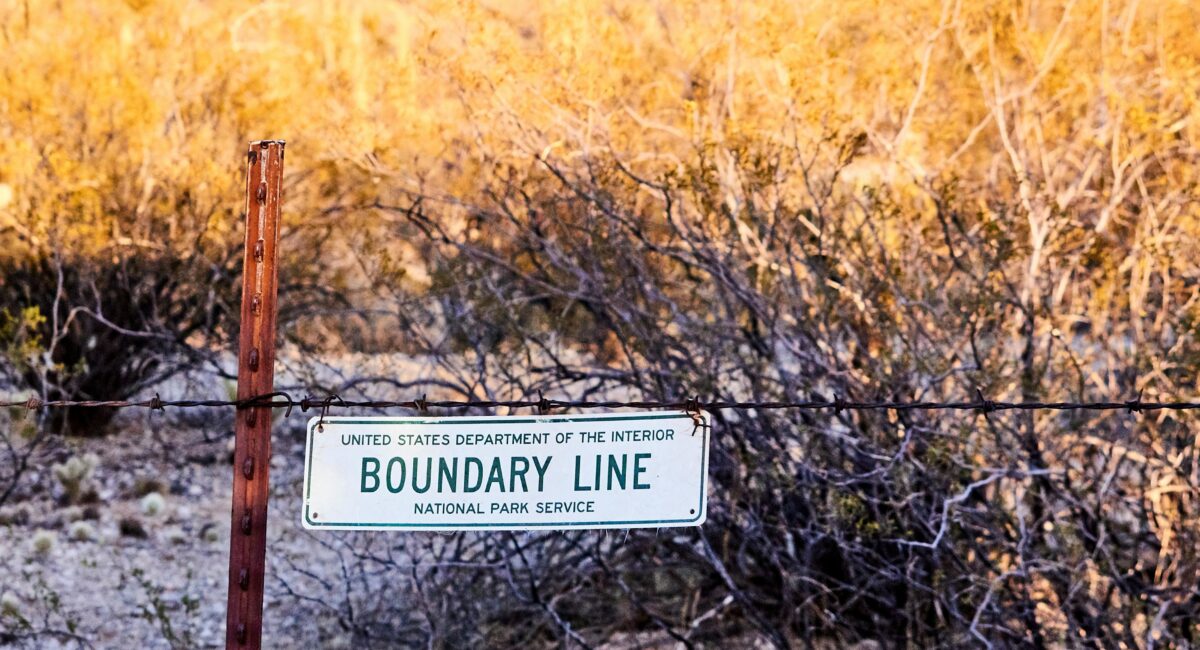
A friend of mine told me this story, which I pass on with consent (an important boundary) and let you know (another important boundary).
Not long after their grandfather died, she received a surprising email from her cousin. In it, the cousin said some rather hostile things, accusing my friend of stuff which she did not think was fair. My friend always felt like there was tension in the relationship with her cousin, so while receiving the email was not a pleasant experience, there was a sense of grievances being laid on the table and…the possibility of resolving them. Yet, her cousin used mean and blaming language, expressing only accusations, no curiosity, and no sense of shared responsibility.
I was impressed with how my friend handled this email. First, she didn’t respond right away, though she wanted to. She had no small amount of swear words she wanted to offer in response.
She took a pause. She considered whether she wanted to stay in relationship with her cousin. She decided that she did, but not if it meant receiving additional emails in this vein. While she thought her cousin’s grievance were wildly off the mark, she sensed that if she were not open to processing them with her cousin, her cousin would opt out of the relationship.
My friend emailed back, acknowledging the grievances but not agreeing to their validity. (Such an important boundary that we so often forget – acknowledging someone’s point of view is not the same as agreeing with it or even giving it merit.) She offered to talk (not email) with her cousin about them, but only if her cousin stopped saying such disparaging things about her and only if a trusted third party would be present to help them.
My friend did not hear back from her cousin for many months. She wasn’t sure where her own email had landed with her cousin. She struggled with regret and worry that she had been too assertive. At the same time, she experienced relief at having been so clear.
At some later point, because my friend still wanted to be in her relationship with her cousin, she sent a birthday card to her. Not long after that, her cousin emailed. In it, her cousin made no disparaging remarks. She did not agree to a mediated conversation, but she did acknowledge the request and was considering it.
My friend considered this a win – not only the response from her cousin, but her own setting of expectations and of her personal boundaries. I think that my friend and the New and Improved Giving Tree might have something in common, finding that sweet spot of expressing expectations, embodying boundaries, and staying in relationship, keeping love at the center for themselves and for the person with whom they are in relationship.

Maybe you know all you need to know about boundaries. Maybe you practice exquisite boundaries and get them just right every time. (Not me.) Maybe you never regret a yes that you have said, or a no. (Not me.) If so, this sermon is likely not for you.
But if you are like me, then you may find it helpful to regularly visit and revisit the concept of boundaries, and what they mean, and what healthy boundaries can mean for your sense of well-being, your sense of being overwhelmed or burned out or frustrated or resentful.
At a recent training for UU ministers, this was offered for the definition of boundaries:
Boundaries define our areas of responsibility and control, bring clarity to our relationships, and help us maintain health and safety for ourselves and the people we serve.
We could also consider this definition:

an invisible demarcation created or experienced by an individual to determine what behaviors from others are acceptable to them.
Or this one, the most elegant I have heard. It comes from therapist, somatics teacher, facilitator, political organizer, and writer, Prentis Hempil:
“Boundaries are the distance at which I can love you and me simultaneously.”
I want to focus on a differential definition that I recently encountered and has been helping clarify my making my way in the world, both professionally and personally. It is the difference between expectations and boundaries.
Expectations are expressed hopes of the behavior of others. For example, in a disagreement, I expect my thought partner not to yell at me and they can expect the same of me.
Boundaries are the limits or standards to which we hold ourselves, often in response to the behaviors of others. If my thought partner yells at me in the middle of a disagreement, I choose to embody the boundary by stating that yelling is unacceptable to me and that if it continues, I will remove myself from the situation.
I cannot set boundaries on other people; I can only inform them of my expectations. I can, however, embody my own boundaries through the options available to me. This is true not only for individuals, but for cohesive groups: teams or communities or congregations can embody our own boundaries through the options available to us. Even the citizens of a nation can do so (and should do so, when their government is violating boundaries of law, ethics, and humanitarianism.)
It’s not too much of a stretch to think expressing expectations of others’ behaviors as a loving invitation to be in right relation with you. An investment in a sustainable relationship that has a form of love at the center. Or to think of embodying boundaries as a form of self-love – again, a sustainable relationship (with ourselves) that has a form of love at the center.
My friend expressed expectations of her cousin: do not disparage me to me. My friend discerned, then embodied her own boundaries: I will talk with you about your grievances, but only with a trusted third party.
There is so much to say about boundaries. Too much for a single sermon, which is why this morning’s sermon is connected to next Sunday’s sermon, both with the same title, Love and Boundaries (parts one and two). Next Sunday, I will share with you the source of that title when I talk about discerning and embodying healthy boundaries in a congregational system.
Today, I want to focus primarily on how we do this in interpersonal relationship – friendships, family relationships, with neighbors or in book groups, with co-workers or other setting with other imperfect human beings. In general, the guidance around articulating and honoring personal and interpersonal boundaries falls into these three, not exactly simple, steps:
Step 1. Be as clear as possible
Step 2. State your need or request directly
Step 3. Accept any discomfort that arises

But we – and by we, I mean human beings, but I also mean we conflict-avoidant Unitarian Universalists, especially those of us in New England (but there are other regional flavors) – often avoid expressing expectations or embodying our own boundaries. Nedra Glover Tawwad, who wrote the best-selling book, Set Boundaries, Find Peace, names the following human behaviors we fall into as forms of avoiding expressing expectations or embodying our own boundaries:
- Gossip
- Complaining
- Avoidance
- Cutting off
Avoiding expressing expectations and embodying boundaries can be a useful tool in situations in which the cost of not setting a boundary is low. For instance, this past week I was at a conference in Connecticut where I decided to avoid expressing my expectation (that we stay on topic in a conversation) and also decided to embody my boundaries (I removed myself from the conversation because it turned to a topic that was not of interest to me). I could do that because I was not responsible for facilitating that conversation. If I had been the facilitator, I could not (or should not) avoid expressing the expectation that the group return to the agreed upon topic.
Cutting ourselves off from a relationship, while it can be a way we avoid expressing expectations and embodying our boundaries, can be the better option if it protects us from harm. Cutting off can be the relational tool we use because we are experiencing a boundary violation central to our humanity.
Yet, too often, cutting off is a form of avoiding the hard work of expressing our expectations and embodying our boundaries. When we do it out of avoidance, we are missing out on deepening our personal resilience. And when we do it here, in our congregational system, we are missing out on living fully into our covenantal promises to each other.
Gossip and complaining are forms of communication triangles that we, sometimes consciously, sometimes unconsciously, fall into. Murray Bowen, famed and respected family systems therapist, says that “the 3-person system [~ the communication triangle ~] is the basic building block of all emotional systems inside and outside the family.”
Communication triangles are, in and of themselves, neutral. These triangles can have positive, generative impact in a setting. These triangles can have damaging, dysfunctional impact in a setting.
How do we know when a triangle is healthy or when it is “tricky” or problematic? Triangles are healthy when they are used for the following purposes:
- Consultation and gaining perspective
- Seeking resources
- Increasing self-awareness through input from some non-sycophantic other
- Looking to relate differently to the felt discomfort or anxiety
Triangles become unhealthy (or what I call “tricky”) when they are used, consciously or unconsciously, to do the following:
- Off-load our anxiety onto someone else
- Seek only validation of our point of view, rather than exploring it from all sides
- Recruit others to a certain position
Next Sunday, I’ll be talking more about these communication triangles because they can be sources of health and sources of significant ill-health in congregational systems such as our own. Our staff tries to stay aware of tricky triangles – the ones that generate ill-health – because in congregational life, they are so easy to fall into. At the end of each Board meeting, we have a set of questions to help us reflect on the dynamics of the meeting and one of them is “Did we embody any tricky triangles?”
Stay tuned and be sure to come next week (or watch it on the livestream).
~~~
In bringing this sermon to a close, I speak again part of this morning’s call to worship, the words of Per Norrgren from his poem, The Quiet Line:
And so, I too, shall keep my distance,
not from love,
but from the weight of it,
when it presses too hard against the boundaries
I have drawn in the sand.
For in these lines,
I find my freedom,
and in this freedom,
I find myself,
whole, unbroken,
a quiet flame burning brightly in the dusk.