First Unitarian Universalist Society of Burlington
Reverend Karen G. Johnston
May 17, 2026
“Hell is other people.”
So asserts my favorite book, Station Eleven by Emily St. John Mandel. It is a book about life in the region we currently consider Michigan, after the Georgian Flu has killed 99.5% of the world’s human population. It’s twenty years later, when normalcy is taking shape among the remnant humans who survived and have been establishing small communities without electrical grids or gasoline engines so they travel by caravan – the metal skeletons of old vehicles pulled by horses.
The story focuses on the Traveling Symphony, a ragtag group of actors and musicians who travel from town to town bringing music and Shakespeare – art being one of the ways the humans still find our purpose, still make meaning, still make community.
“Hell is other people” is a riff on a quote from the French philosopher, Jean-Paul Sartre. The assertion comes at the end of a long and delicious passage that makes little sense in full unless you know the characters, but is worth giving you a taste. It starts
“The problem with the Traveling Symphony was the same problem suffered by every group of people everywhere since before the collapse, and undoubtedly since well before the beginning of recorded history.”
Then a long, granular list – the complaints of the third cello and the offenses of the first and seventh flutes or the fourth guitar (not the instruments, but the people who play them), not to mention the lead actor or the understudy – all the resentments, the insults, the extended, particular, peculiar list of resentments, some secret, some not at all.
“…and so on and so forth, and this collection of petty jealousies, neuroses, undiagnosed PTSD and simmering resentments lived together, traveled together, rehearsed together, performed together 365 days a year.
But what made it bearable were the friendships, of course, the camaraderie and the music and Shakespeare, the moments of transcendent beauty and joy when it didn’t matter who used the last rosin on their bow. Someone had written “Sartre: Hell is other people” in one of the caravans and someone else had scratched out “other people” and substituted “the flutes”.
That passage, when understood generally and symbolically, is a description of how any group of people come together to attempt to live and love together, how challenging it can be, hence: hell is other people.
Yet, this is not the primary message of the book, only one stop on its journey. In fact, the book’s poignant other assertion is nearly the opposite: “Hell is the absence of the people you long for.”
It is challenging co-existing with other humans. There’s no perfect way to do it and a lot of imperfect, problematic ways. But like some say about democracy, it’s a terrible system, but the best of all the alternatives.
I say this somewhat with my tongue in my check, because I also happen to believe, and find this belief rooted in the essence of what I think Unitarian Universalism is, that what is most likely to save us on this mortal journey on the earth, and most especially in times when the world is on fire, is not going it alone. It is finding each other. It is showing up for each other. So, while I would not go so far as to say that “heaven is other people,” my humanist proclivities tell me that making community with each other is how we get through the challenges of this life.

Our Unitarian Universalist Values invite us to consider how we are with each other through the lens of our commitment to a “free and responsible search for truth and meaning” which was originally articulated in our fourth Principle and continues to live in the covenant associated with our Value of Pluralism: “We covenant to learn from one another in our free and responsible search for truth and meaning. We embrace our differences and commonalities with Love, curiosity, and respect.”
Another assertion, this one utterly optimistic: we embrace our differences and commonalities with Love, curiosity, and respect. Yet sometimes, we are clumsy. Sometimes, we fall down on that job. Sometimes, the divisiveness of the world is not just out there, but is in here – in this space we create together and inside each of our hearts. Hell is other people and yet we aim for it to be some version of heaven: love, curiosity, respect.
You may or may not have been here last week, for part one of this sermon series on love and boundaries. That’s okay. This will still make sense and I hope, be meaningful to you.
Love and boundaries is the title of last week’s and this week’s sermon. It’s a term that comes from a spontaneous sermon one of my colleagues had to give after their Sunday service experienced a particular kind of hell: their worship service was disrupted.
Because of the wonders of technology, this disruption was videoed as part of their livestream. Because their congregation responded in an amazingly effective way, we use that video to train our worship associates, caretaking staff, and others on how to respond, were a disruption of any kind to happen here.
There are many kinds of potential disruptions. This particular one was a sole adult human being known to the congregation. In response to his disruptive behavior, he was persistently tended to and peacefully escorted from the sanctuary by lay leaders, while others tended to the congregation. Then the lead minister addressed the congregation, helping to make meaning of what just happened.
Since this disruption came from among the congregation, she preached of the expectations of covenantal behavior and the importance of embodying collective boundaries to help meet those expectations. She said this simple and yet so complex sentence:
“All we can do is show up with love and boundaries.”
Really? Is that enough? Isn’t that a little meager? Can that really be sufficient?
Or is that, in fact, ambitious? Not only ambitious, but admirable and worthy. Show up with love AND boundaries. Not one or the other but both, simultaneously.
The reading in this morning’s service was the preamble of the draft policy the Board of Trustees of the Society are considering. They spent time on it last month and as is the Board’s practice, they focused on understanding the draft and asking questions, not on immediately approving it. It is before them on Tuesday’s agenda whether to vote on the latest draft, revised based on comments from last month’s Board meeting.
This policy, called the Disruptive Behaviors policy, is a common policy in Unitarian Universalist congregations. It’s a policy to help us practice calling in fellow congregants when there is behavior that falls into one of these four categories:
· Threats to personal safety or property
· Disruption of Society activities
· Damage to belonging and welcoming
· Behavior that is harmful to individuals or groups
It is a policy that is referenced in our by-laws but didn’t actually exist: “fair and reasonable policies and procedures approved by the Board” “for unacceptable behavior.”
It is a policy that affirms the Senior Minister’s role to be one of pastoral presence when congregations are the source of disruptive behaviors, rather than to be the one who has to reign it in; that now belongs to all members and the Responsible Behavior Council described in the policy and appointed by the Board.
It’s a policy to help us live into our congregational covenant (and likely help us notice that our covenant needs some refreshing).
It is a policy-based way of expressing love through covenantal boundaries and a transparent process that eliminates favoritism.
It is a policy that puts flesh on the bones of the “free and responsible” community building we embody as a congregation. We must all have our free right of conscience, and we must all behave responsibly towards each other.
Last Sunday, in Part I of this sermon, I spoke about the communication triangles we humans can fall into – in our families, at work, in our neighborhoods, among our circles of friends, and, yes, in our congregational life.
A communication triangle is where we talk not directly to someone with whom we have an issue, but to a third person. For instance, if I have an issue with my neighbor on my right side, but instead of talking directly to them, I talk about it to my neighbor on my left.
Triangles don’t have to be among three people – one of the points of the triangle might be an issue or a challenging decision facing a group of people. Here’s an example that, if you have spent any time in a congregational setting, either as a congregant, staff person, or clergy, you might find familiar.
Person A is anxious about an issue. They are Point A of the triangle.
The issue that is causing them worry is Point B of the triangle.
Person A talks to Person C about the issue, urging person C to do something about the issue.
The issue could be political, social justice, or a concern within the congregation like the annual budget or a why a bulletin board has outdated flyers on it.
Person A feels better temporarily to have off-loaded their worries, but nothing changes.
And Person C is now holding the anxiety, having been recruited by Person A.
And nothing is happening to solve the issue.
Some triangles can actually be helpful and can help us grow our congregational health (or family health, or book group health – wherever humans gather in a group). How do we know when triangles are healthy? Well, I’m going to ask for a little help.

Did you ever watch the comedy duo, Key & Peele? They had popular show from 2012-15. One of their sketches was Luther, Obama’s Anger Translator, where Peele played Obama and Key played Luther.
It was so popular, the actual President Obama brought Luther, the Anger Translator, to the White House Correspondent’s Dinner in 2015. If you aren’t familiar with it, it’s worth watching it on YouTube.
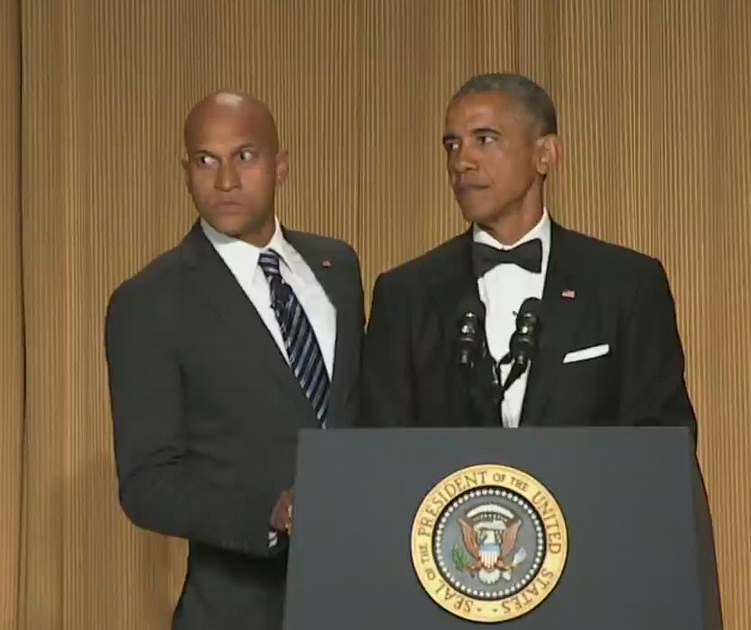
Now, I don’t need an anger translator, but I need a triangle translator. I’m going to ask Dan to come up here again because he did such a great job with the Station Eleven interpretation.
So we know triangles are healthy when they are used for the following purposes
· Consultation and gaining perspective (“Can you help me with this issue I am having? I need another perspective”)
· Seeking resources (“I have this issue I want to raise and I’m trying to figure out how to do it. Can we brainstorm together?”)
· Increasing self-awareness through input from some non-sycophantic other (“I’m trying to understand why this bothers me so much – can I tell you about this and you be honest with me? I don’t need a yes-man, I need to figure this out.”)
· Looking to relate differently to the felt discomfort or anxiety (“I just don’t feel good about this issue and I need a thought partner to help me understand why. I’d like to figure this out before I move forward with this.”)
Triangles are tricky – and problematic for the health of a congregation – when they are used, consciously or unconsciously, to
· Off-load our anxiety onto someone else (“Tag, you’re it. Now you get to worry and I’m going to go about my day feeling so much better.”)
· Seek validation of our established point of view (“I only want you to talk with me if you are going to affirm that my opinion is right.”)
· Recruit others to our position (“This is a problem and I want others to tell me they agree.”)
Do these things happen in this congregation? Of course they do. They happen in every congregation. In every group, eventually. It’s part of why we recognize the truth of “hell is other people” – this can be messy dynamics.
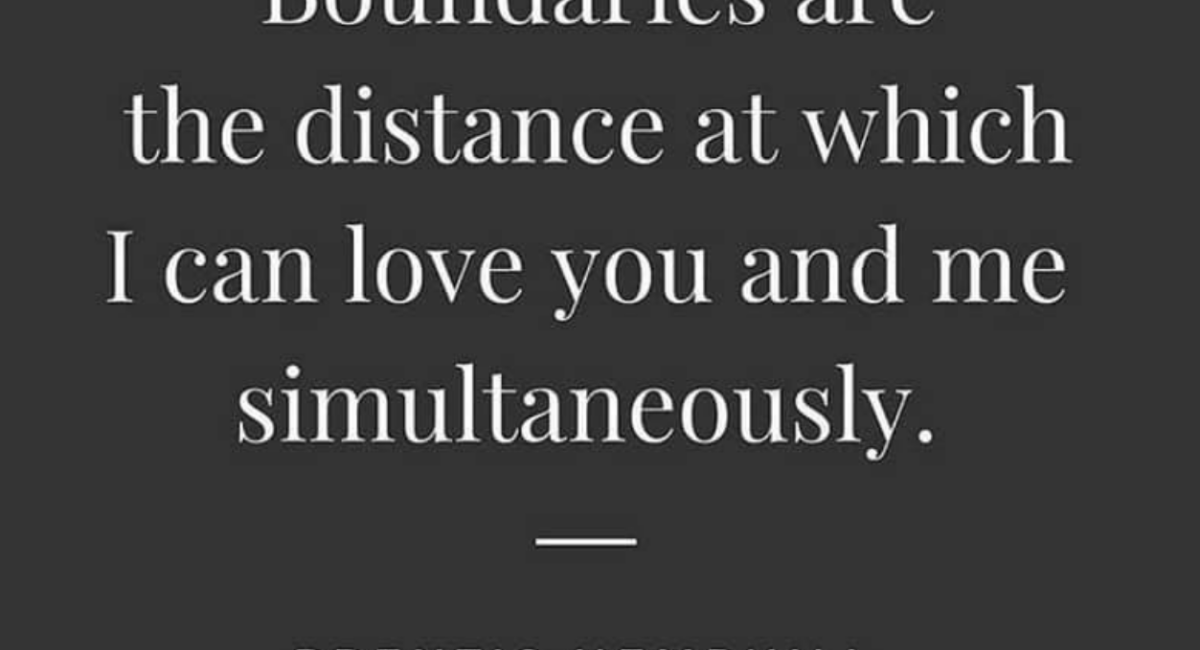
Last week’s sermon offered this definition of boundaries from somatic teacher Prentis Hempil:
Boundaries are the distance that allow me to love both you and me simultaneously.
How do we learn to co-exist as a beautiful garden, one that is made up of messy human beings? An ongoing commitment to clear expectations of behaviors and flexible embodiment of personal and collective boundaries. An ongoing, explicit commitment to avoid tricky triangles and to pursue direct communication in service of our congregational covenant, mission, and Vision of Ministry. A new commitment to grow our spiritual muscles so that we can listen to each other, not to persuade or agree, but to understand. A renewed commitment to assume good intentions while simultaneously while making space to tend to unintended impact or harm.
These are how we tend our beautiful garden, full of all sorts of flowers, including dandelions we are able to learn to love because some of us already admire their abundant, lush petals or their brilliant ability to spread their sunny joy, and some of us learn to love the dandelions at a further distance, in our neighbor’s yard, or at the park down the street, finding that boundary that allows us to love both you and me simultaneously, that allows us to co-exist together while being the robust, engaged congregation our potential tells us we can be.
Maybe we are a garden with dandelions and we are learning to live and love their presence.
Or a traveling symphony.
Or a Unitarian Universalist congregation that chooses to practice intentional, thoughtful, boundaried co-existence with and for each other.