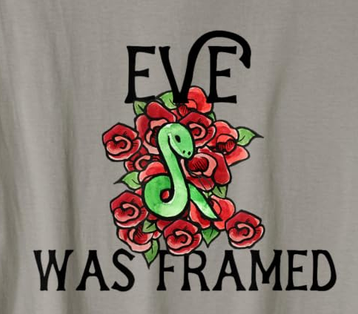
First Unitarian Universalist Society of Burlington
Reverend Karen G. Johnston, Senior Minister
October 18, 2026
The story of the Garden of Eden, of Adam and Eve: abbreviated:
God makes Adam from mud and breath. God makes all the creatures and places Adam as their head. God notices Adam is lonely and creates another person who eventually is named Eve ~ or Chava, or Hawwa ~ “mother of all the living.” (Genesis 3:20). In-between, God tells Adam to eat anything/everything he wants in the garden. Except from the Tree of Knowledge.
Let me ask you: how many parents do you know who forbid their children from something by placing it in their immediate grasp and then walking away?
To the surprise of no one, they break the rule. First Eve eats a fruit of the Tree of Knowledge. Adam is with her when she does this, and when she offers it to him, he eats it. When God learns of this transgression, both Adam and Eve pass the blame: Adam blames Eve and Eve blames the serpent. God curses all three and sends them from the garden.
For those who were raised Christian, this story is offered as the explanation for the concept of Original Sin. Yet, this passage pre-dates Jesus by a long while. Before it was a Christian story, it was a Jewish story and there is no concept of Original Sin in Judaism.
In fact, at the time of Jesus, there was no concept of Original Sin – it came from a 2nd century Bishop in the new church and was later expanded by others, becoming an entrenched, and quite damaging, piece of dogma.
In our times, whom does that particular interpretation or narrative serve? White Christian Nationalism.
Whom does it not serve? Not women ~ never has, never will.
Yet, this need not be the only way to understand the story of Eve. This need not be the only narrative. It is, in fact, not the only narrative.

As I have noted from this pulpit before, in Judaism, there is a long-existing tradition among rabbis to create midrash – stories that fill in gaps, or attempt to smooth contradictions, in scriptural text. Because there are a lot of them. The midrashic tradition is so embedded that sometimes these stories can be confused for actually being in the Bible.
During the second wave of feminism in the 1970s, Jewish feminists claimed the power of midrash, refusing to let it be the sole domain of the mostly male Rabbinate. They developed a splendid tradition of stories to reclaim what was otherwise used against women and against women’s collective inherent worth and dignity.
For instance, Judith Plaskow wrote what became a well-known feminist midrash about Adam’s first partner – and it wasn’t Eve. Before Eve, according to some ancient midrash traditions (written by men), there was Lilith – not named in Genesis, but read between the lines and into the text.
Those ancient midrashim tell us that Lilith refused to be subservient to Adam and fled the Garden. It was her refusal to be subservient and to put up with inequality, that led her to flee, which led to her becoming a demon.
Or so the ancient story goes. Judith Plaskow’s midrash of over fifty years ago tells of a different Lilith – one who maintains her autonomy and eventually forms a sisterhood of mutual aid with Eve. Which, in patriarchy-saturated contexts such as ours, would be considered demonic behavior.
Whether we believe them or not, whether we take them as fact or myth, creation stories are where we root our collective sense of identity. They provide the foundation for our orientation for the world…at least partially. It is inevitable that we are shaped by them, for their influence is at the collective subconscious level.
In reflecting on the difference between the story of Eve and the story of Skywoman, the primary female character in the origin story of her people, Potawatami author, Robin Wall Kimmerer tells us in her book, Braiding Sweetgrass,
On one side of the world were people whose relationship with the living world was shaped by Skywoman, who created a garden for the well-being of all. On the other side was another woman with a garden and a tree. But for tasting its fruit, she was banished from the garden and the gates clanged shut behind her. That mother of men was made to wander in the wilderness and earn her bread by the sweat of her brow, not by filling her mouth with the sweet juicy fruits that bend the branches low. In order to eat, she was instructed to subdue the wilderness into which she was cast.
One story leads to the generous embrace of the living world, the other to banishment. One woman is our ancestral gardener, a co-creator of the good green world that would be the home of her descendants. The other was an exile, just passing through an alien world on a rough road to her real home in heaven…
Kimmerer continues
Look at the legacy of poor Eve’s exile from Eden: the land shows the bruises of an abusive relationship. … we can’t meaningfully proceed with healing, with restoration, without “re-story-ation.[1]” …But who will tell [the stories]?”
Restoration through re-story-ation. Healing through reclaiming.
Who will tell the story of Eve? Will we let the clumsy, often malicious, interpreters of ancient scripture, the ones steeped with misogyny and the drive to dominate and be the arbiters of this widely influential story? What do we lose if we cede that power to those people, deciding that the stories of ancient scripture aren’t worth our time or energy?
I tell you what we get: pervasive abuse of women. So, pervasive, so many women – too many women – blaming ourselves for nearly everything, forming ourselves into the shape of shame.
We get deep patterns of physical, psychological, and emotional abuse in every culture and tradition.
We get any female-presenting body demeaned, subjected to systemic violence and the pervasive threat of violence.
We get “missing white woman syndrome” where mainstream media pays disproportionate attention to missing white women than to missing Indigenous women and other women of color.
We get horrifically high rates of the murder of transwomen of color.
We get a world in which a binary sense of masculine and feminine cuts every human in one way or another, silencing parts of us, maiming soul, stunting psyche, sometimes killing us.
What might we gain if we do not cede that power and authority? What if we were to choose the freedom that comes from accepting responsibility for our own desires and destinies, our own trees of knowledge?
What if we were to reclaim Eve as ancestor and kin, shero and inspiration? Might we lose the false and terrible calm promised to only some of us? Might we be able to emerge from boxes imposed on us, entrapping us?
Instead of Original Sin, how might we understand the story of Eve? How might we understand her decision to eat the fruit as something not sinful, and not even a mistake? Where can we turn to different understanding, empowering interpretations, that help us not wed ourselves to the past, but give us inspiration for now and into the future?
[guest readers come forward to lectern]
In juicy, meaningful situations like this one, the first place I tend to look is poetry. Poetry long before scripture. Poetry as scripture. A tell-tale sign that I am a Unitarian Universalist? Could be.
So, let’s share these passages from poets who have claimed the story of Eve as their own, remaking it for all of us, an invitation to shift not only the narrative of Eve, but of our own lives.
First, there is our reading today. Titled, “Eve, After,” written by Danusha Laméris, published in 2013. Here again is the ending:
Foolishness, betrayal,
—call it what you will. What a relief
to feel the weight
fall into her palm. And after,
not to pretend anymore
that the terrible calm
was Paradise.
In that piece, you can hear the echoes of this earlier poem, written by former U.S. Poet Laureate, Rita Dove, called, “I Have Been a Stranger in a Strange Land.” It ends in this way:
And there was no voice in her head,
no whispered intelligence lurking
in the leaves—just an ache that grew
until she knew she’d already lost everything
except desire, the red heft of it
warming her outstretched palm.
Then there is this quick clip of an end to a poem written in 2015 by Ansel Elkins. The title is “Autobiography of Eve.”
Let it be known: I did not fall from grace.
I leapt
to freedom.
And finally, there is this lush, voluptuous piece from Marge Piercy, published in 1998, titled, “Applesauce for Eve:”
You are indeed the mother of invention,
the first scientist. Your name means
life: finite, dynamic, swimming against
the current of time, tasting, testing,
eating knowledge like any other nutrient.
We are all the children of your bright hunger.
We are all products of that first experiment,
for if death was the worm in that apple,
the seeds were freedom
and the flowering of choice.
There are other great sources of good, provocative stuff in this same spirit. For instance, Rabbi Danya Ruttenberg, believes the story of Eve to be revolutionary, because it is the first
story of breaking free of a partner’s expectations, of choosing to step outside a dynamic that may have been safe, and comfortable, … and following intuition, and the instinct for growth. Stepping out into the unknown. And even more than that—…this first brave act of free will becomes defining for humanity. This was the decision to choose understanding over blissful ignorance, engagement with the world and its pain instead of remaining in a comfortable bubble. This was the decision to learn and grow and face hard truths—even if doing so sometimes came with difficult consequences.
Unitarian Universalist minister, Rev. Rachel Lonberg, suggests something similar: that Eve isn’t tricked into eating the fruit. That she chooses it. Both she and Adam choose to live awake and self-aware. Rev. Lonberg tells us that god doesn’t create suffering as punishment. It just is part of the bargain: awareness of “all that is happening and thinking deeply about it, can be a source of pain.”
And isn’t it through this awareness and suffering that we gain the ability to know the difference between right and wrong, a defining aspect of what it means to be human? It raises the question of whether in paradise we could have ever been fully human.
There is so much to be learned from this freedom-seeking, bold Eve who is not interested in terrible calm. As Rabbi Ruttenberg writes
Eve teaches us that we can constantly strive to grow and to learn and to stretch ourselves, and that facing pain may be preferable to eternal avoidance of it. And that sometimes we can bring the people that we love along with us, if they’re willing to join.
There is so much to celebrate, rather than condemn, in Eve and her choices.
There’s that bumper sticker: WWJD – what would Jesus do? In Vermont, I think there’s a version with WWBD – what would Bernie do? Maybe there should be WWCD – what would Champ do?
This morning, I am wondering WWED – what would Eve do? Or WWLD – what would Lilith do?
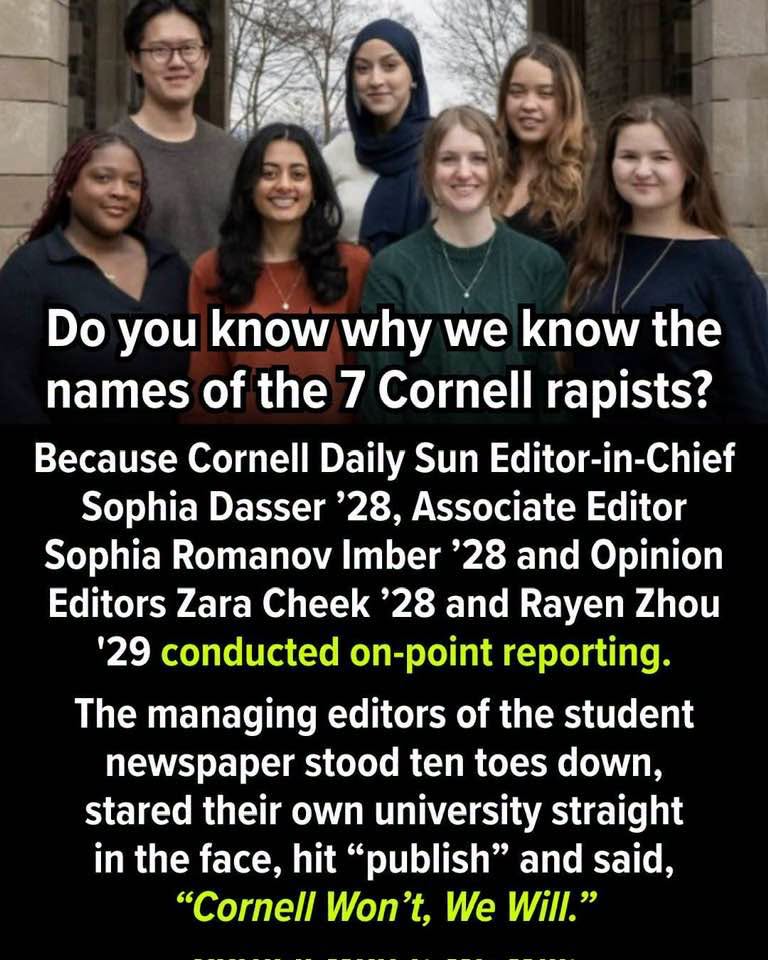
I think they would raise up the student journalists from Cornell University. Without their intrepid reporting, the Jane Doe suing after the horrific sexual assault she endured might have been suffocatingly swept away.
I think Eve and Lilith would raise up the #IAmJaneDoe – raise up #IAmDoe – movement – a growing response to those seeking to discredit all victims of sexual harm. That punishing impulse seems to have inadvertently birthed this latest solidarity movement, this generation’s #metoo, with people of all genders speaking out.
I think that both Eve and Lilith, in the face of such powerful solidarity, would say that we are not falling from grace, but leaping to freedom.