April 19, 2026
First Unitarian Universalist Society of Burlington
Reverend Karen G. Johnston, Senior Minister
On this Earth Day Sunday, we could explore the latest depressing news of the climate crisis – like the projections that the Atlantic Meridional Overturning Circulation current (AMOC), the main current in the Atlantic Ocean, is now projected to collapse by the end of the century, which will have catastrophic consequences for Europe, Africa and the Americas. Or that the U.S. Senate voted to allow mining in the Boundary Waters of Minnesota.
We could explore again, as we did in September on Sun-Day, the hope-giving news of renewable energies, reminding ourselves that America’s obsession with fossil fuels is not universally shared around the world, thereby grounding ourselves in hope.
Or we could take a journey into Vermont legislation or community-based activities that remind us of our power to save what can be saved.
Yet, I find myself called to remind us – remind myself – of this home of ours as a source for grounding ourselves (sometimes literally, in the soil) when chaos is happening in our personal lives and in the world around us.

It’s not just a religious or spiritual perspective that we are all one. Science confirms human bodies are not only connected by evolution (a past story), but the current reality that elements of earth are within us, not just minerals in our bones and bloods, but living creatures that, when in balance, are at the core of our health.
Our shared biota, a collection of tiny microorganisms within us and surrounding us, is the evidence of our oneness.

How might we let this shift our perspective, like this poem, from Jarod K. Anderson, who [verb] the social media presence, Crypto-Naturalist:
Long ago, a stone felt a tingle on its skin. Moss.
A new feeling. A green feeling.
The granite spoke of ages in the heat of deep Earth.
The moss sang the taste of sunlight and the softness of salamander bellies.
They named one another. And told those names to no one at all.
Shake our world, shift our perspective, change our lives.
When I was at the Insight Meditation Society for a silent meditation retreat a few months ago, I encountered a statue. There are lots of statues there, but this one was new to me.
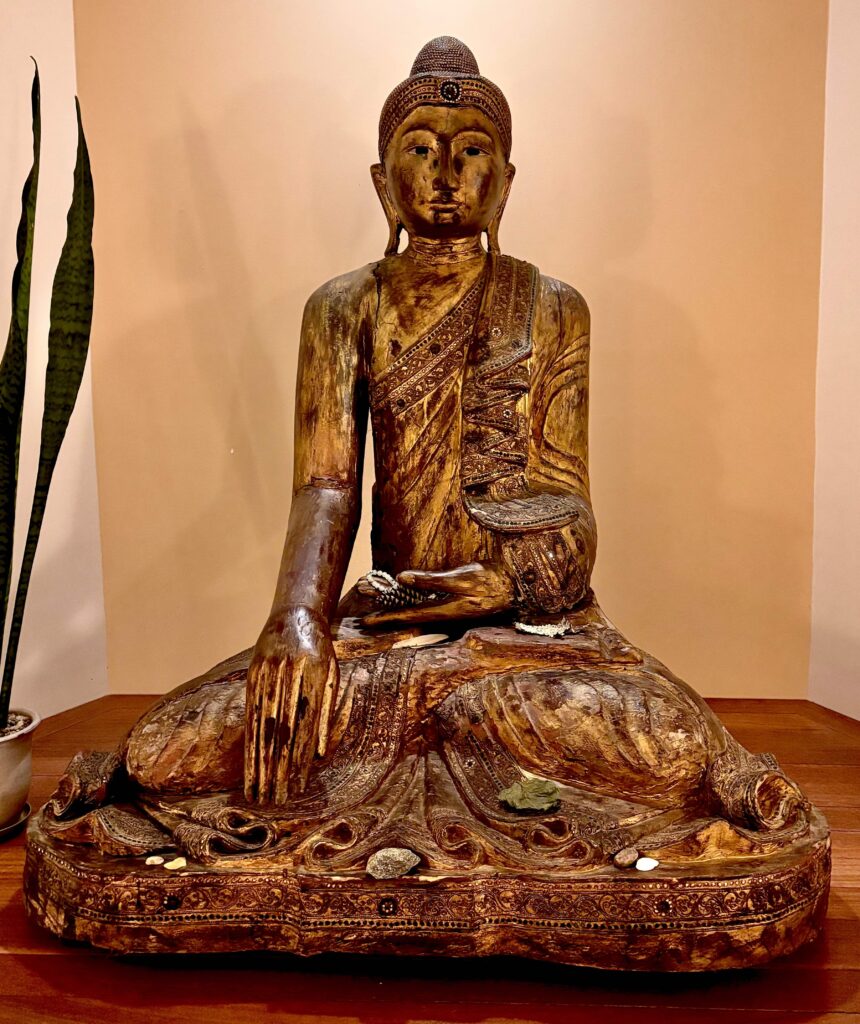
This statue was in an out-of-the-way space, down a set of stairs that didn’t get much foot traffic. Larger than life, in a seated position, a beautiful golden patina and a face I found irresistible. I was immediately enamored. In free time and when we were assigned walking meditation, late at night and early in the morning, I would find myself in the little room where this statue’s presence held sway over me.
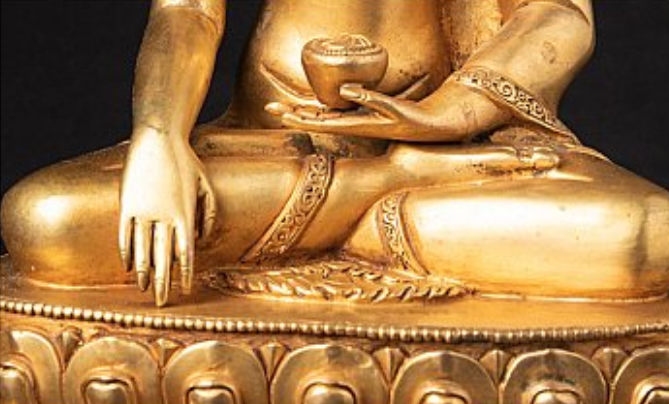
This statue of Buddha had its left hand peacefully in his lap, palm upward, and the right hand on his knee, long fingers pointing down and touching the earth. The hand gestures are called mudras and this one is called the bumisparsha mudra, or the touching earth mudra.
It is the mudra associated with the enlightenment story of the Buddha: after long spiritual journeying to reach enlightenment, years in the making, Siddhartha sat beneath the famed Bodhi tree. It was there that he was visited by Mara, the spirit or demon of Temptation, who used all his tools of chaos to try to make Siddhartha swerve from his path. In response to the escalating acts of aggression and distraction by Mara, Siddhartha touched the ground beneath him, invoking the Earth as his witness. The Earth shaked. It quaked. It roared. In doing so, Mara was dispelled and Siddhartha attained enlightenment.
Shake our world, shift our perspective, change our lives.
I think about this powerful story, this myth handed down over millennia, and the meaning it holds. Especially this year, with our long, long winter, and how I longed, longed to get out to the garden, to the soil under the snow, because not only was the long winter getting to me, but the chaos of the world was taking its toll. Is taking its toll.
I longed to sink my hands into the soil because I needed the healing and groundedness that I find only there. Gardeners in the room: can you feel me?
Whether after a long winter or after a long day: touching earth can put a long day or a hard day into perspective, can offer insight or solace or both. It is about connection. It is about a visceral experience of non-separation. It is about right relationship with the earth. You need not be a gardener to experience this. You can be an astronaut.
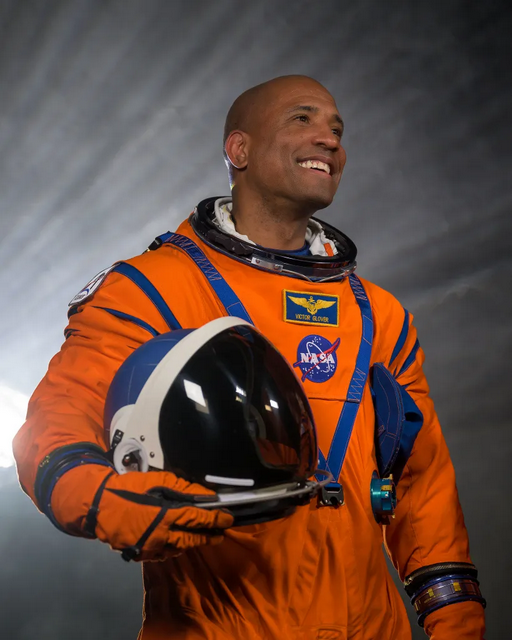
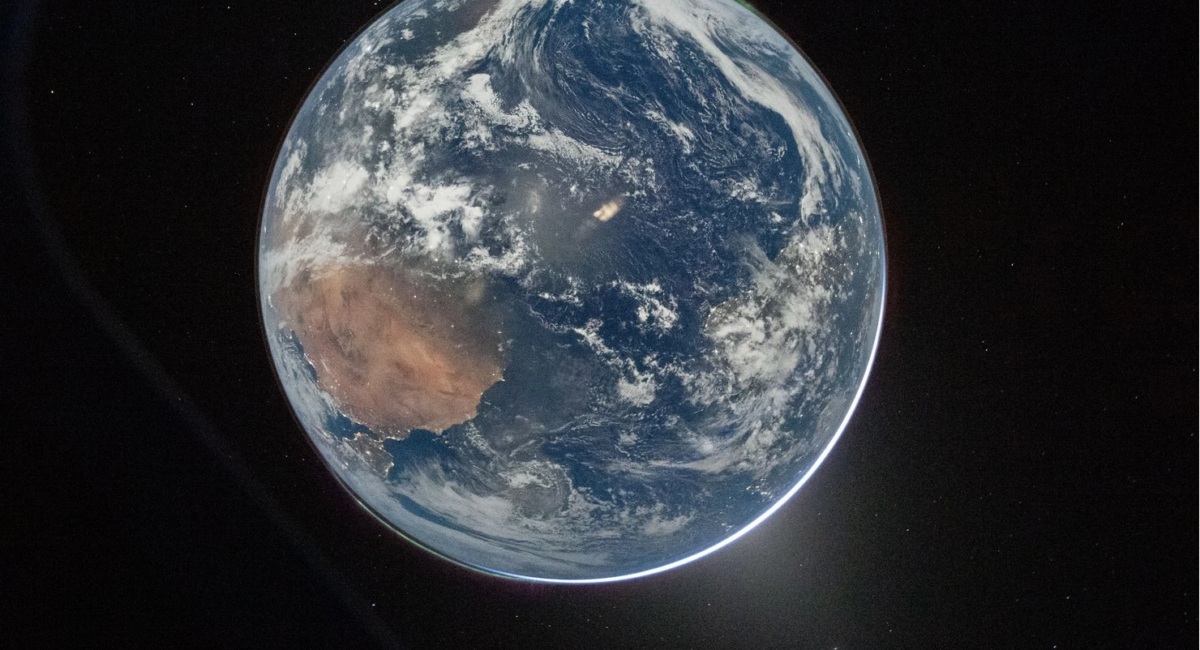
Did you catch the powerful words spoken by Victor Glover, pilot of the Artemis II space mission? This travel into space, to the moon for the first time in over fifty years. This travel into space past the moon for the first time ever. This travel into space that gave us our first look from space at planet Earth in over half a century. A bit different than sitting on the ground and touching the earth, whether a buddha or a gardener, but still very much able to give us a sense of perspective and purpose.
So many, many miles from our pale blue dot of a planet, Glover said this on April 5th, which happened to be the Christian holiday of Easter:
… for me, one of the really important personal perspectives that I have up here is I can really see Earth as one thing….In all of this emptiness — this is a whole bunch of nothing, this thing we call the universe — you have this oasis, this beautiful place [where] we get to exist together….I think as we go into Easter Sunday thinking about all the cultures all around the world —whether you celebrate it or not, whether you believe in God or not — this is an opportunity for us to remember where we are, who we are and that we are the same thing. And that we got to get through this together.
Shake our world, shift our perspective, change our lives.
Back on earth, such a perspective can and should shake us, just a bit, perhaps a lot, out of our habitual ways that place ourselves at the height of evolution and our needs at the center of all priorities. Such a perspective invites us, encourages us, nudges us, admonishes us, to not just touch the Earth, but to shift our perceptions of Earth – to take as more real its living, breathing, sentience – in parts and as a whole.
One way to do this is a growing movement to recognize the “personhood” of rivers. Since 2017, this innovative approach has elevated rivers to the status of legal persons, affording them the similar rights and same protections as human beings. It started with the Whanganui (whaang·guh·noo·ee) River in New Zealand and has spread to other rivers in other countries: the Atrato River in Columbia and the Magpie River in Canada.
This movement has traction in the United Kingdom, where those who have touched the Earth, known its power, and rather than receiving witness, are offering their witness, have declared that the River Roding deserves legal protections similar to the protections that humans deserve. They have issued this declaration that says that the River Roding has:
- The Right to Perform Essential Functions Within its Ecosystem.
- The Right to Flow, which includes freedom from “unnecessary obstructions that inhibits the river’s flow and life,” as well as “the right to flood” and “the right to be connected to its tributaries and wider catchment.”
- The Right to feed and be fed by healthy & sustainable aquifers.
- The Right to be Free from Pollution and Rubbish.
- The Right to Conservation, such as “the protection of existing river and riverside habitats & biodiversity” and “the halting of encroachment and development onto river habitats & marshlands”
- The Right to Regeneration and Restoration, including the “right to re-follow its natural course, meander and move” and “to the re-naturalisation of riverbanks.”
and
- The Right to a Healthy Relationship with Humans
This environmental work comes out of local communities using their moral imaginations, if ever so imperfectly, to see the Earth from the Earth’s perspective. People are gathering to create what is called Inter-Species Councils, a form of exercise first developed by the late Joanna Macy with her collaborator, John Seed. In these gatherings, human beings take on the personas of different aspects of the natural world, in order to give them voice within conversations and decision-making processes led by humans.
For instance, someone speaking as a birch tree might say this: “I’m worried there’s too much of me. I thrive in open spaces, but I can take over.”
Or a river might speak up and say, “I’ve just been seen as a resource, and not even acknowledged for how much I’ve given this landscape. I hate when humans make me fit in and be smaller than I am.”
These words are, in fact, some of what was said at an Inter-Species Council held in Oppdal, Norway not that long ago, growing the chances for humans’ continued co-existence with and on the Earth. These Councils complement scientific data by cultivating interspecies empathy – helping to dissolve that false duality of separation between humans and nature.
Is this glorified role-playing? Sure.
Is it problematic anthropomorphizing? Well, it might be the latter (anthropomorphizing), but I’m not sure it’s the former (problematic). After an Inter-Species Council in April, 2023, held in defense of the River Roding, environmentalists who live in that watershed wrote these words:
“While we can’t truly know the answers to these questions, the process of stepping out of our own shoes can help to deepen empathy and create new perspectives. More-than-human thinking asks us to engage with the needs of both humans and other species in decision-making, recognising that our actions often have an impact beyond people-centred considerations.”
More than human-thinking: this is what touching the Earth can do for us. Touching earth can help us to connect with this beleaguered planet under attack by our very own lifestyles and late-stage capitalism. It can help us so that we take protections more seriously. Touching earth allows us to ground ourselves when chaos reigns or help us to center ourselves when we are pulled off course.
This Inter-Species Council may sound utterly silly to you. Or weird. Or like wasteful shenanigans when serious approaches must be pursued. Yet I love this response from Phoebe Tickell, the UK woman who has been leading this environmental work centered on the River Roding. She asks
“Is it sillier to ask someone to imaginatively inhabit the perspective of a different species for an hour, or to continue running governance systems that have driven a 70% collapse in wildlife populations in 50 years?”
When I hear these words from a British woman named after a bird, I can’t help but hear the same thing that Victor Glover spoke from outer space:
I can really see Earth as one thing
May we accept the invitation for Earth to be teacher, for Earth to be comforter.
May we allow our world to be shaken, our perspectives to be shifted, our lives to be changed.
And if we must lie flat on the earth for now, staying with the breaking, even if we might appear defeated, let us be like the tulips bulbs who survived the winter and are just now springing forth and about to show their glory and their power.
May our sense of interconnection and interdependence deepen so recklessly that we fend off any demon of temptation or chaos, shaking ourselves awake, shifting our perspective, choosing love at the center of how we are with this Earth.